
Where to Find the Most Authentic Italian Pizza in Naples
The City Where Pizza Became a Craft
Pizza in Naples is more than a meal. It is part of the rhythm of the city.
Walk through the historic centre and you will see dough being opened by hand, tomatoes spooned across soft bases and pizzas moving quickly through fiercely hot ovens. The process looks simple, but every movement reflects years of repetition and judgement.
Traditional Neapolitan pizza is recognised by its soft, elastic base, thin centre and raised cornicione. The toppings are usually restrained, allowing the dough, tomato, cheese and olive oil to remain distinct.
That simplicity is exactly what makes it difficult to perfect.
Naples has hundreds of pizzerias, ranging from small neighbourhood shops to internationally recognised names. The following restaurants stand out for their history, traditional approach and connection to the city’s pizza culture.
L’Antica Pizzeria da Michele
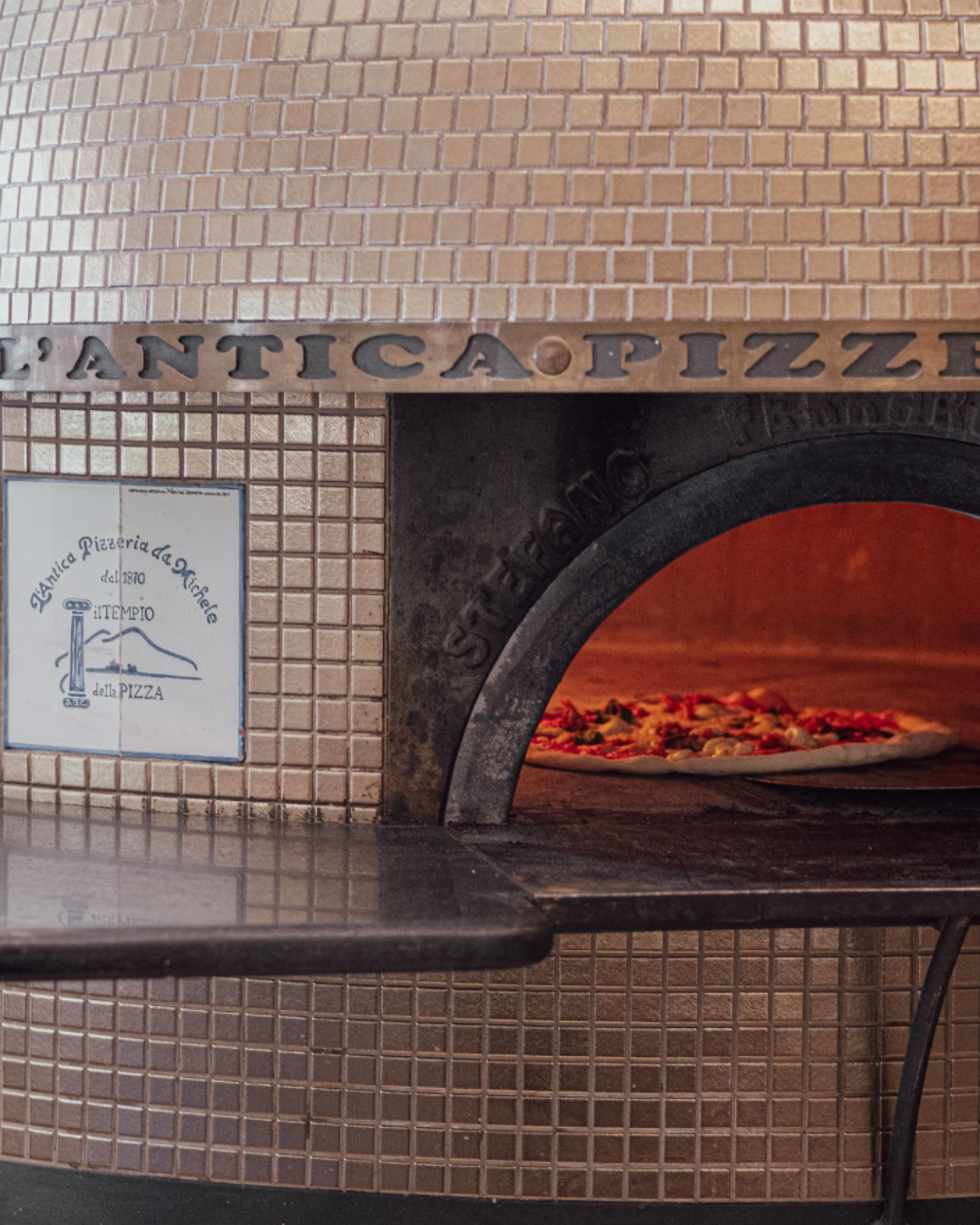
For many visitors, Da Michele is the first name associated with traditional pizza in Naples.
The Condurro family began making pizza in 1870, and the historic Naples restaurant remains known for a deliberately focused menu. Its traditional offering centres on the Margherita and Marinara, keeping the attention on dough, tomato, cheese, garlic and oil rather than elaborate combinations.
The pizzas are broad, soft and thin through the centre, with a tender crust shaped by intense oven heat. Numbered tickets are commonly used to manage the queue, and the room has the energetic, shared atmosphere of a working Neapolitan pizzeria.
What to order: Margherita or Marinara
Why visit: To experience one of Naples’ clearest examples of simplicity, tradition and fast oven cooking.
Antica Pizzeria Port’Alba
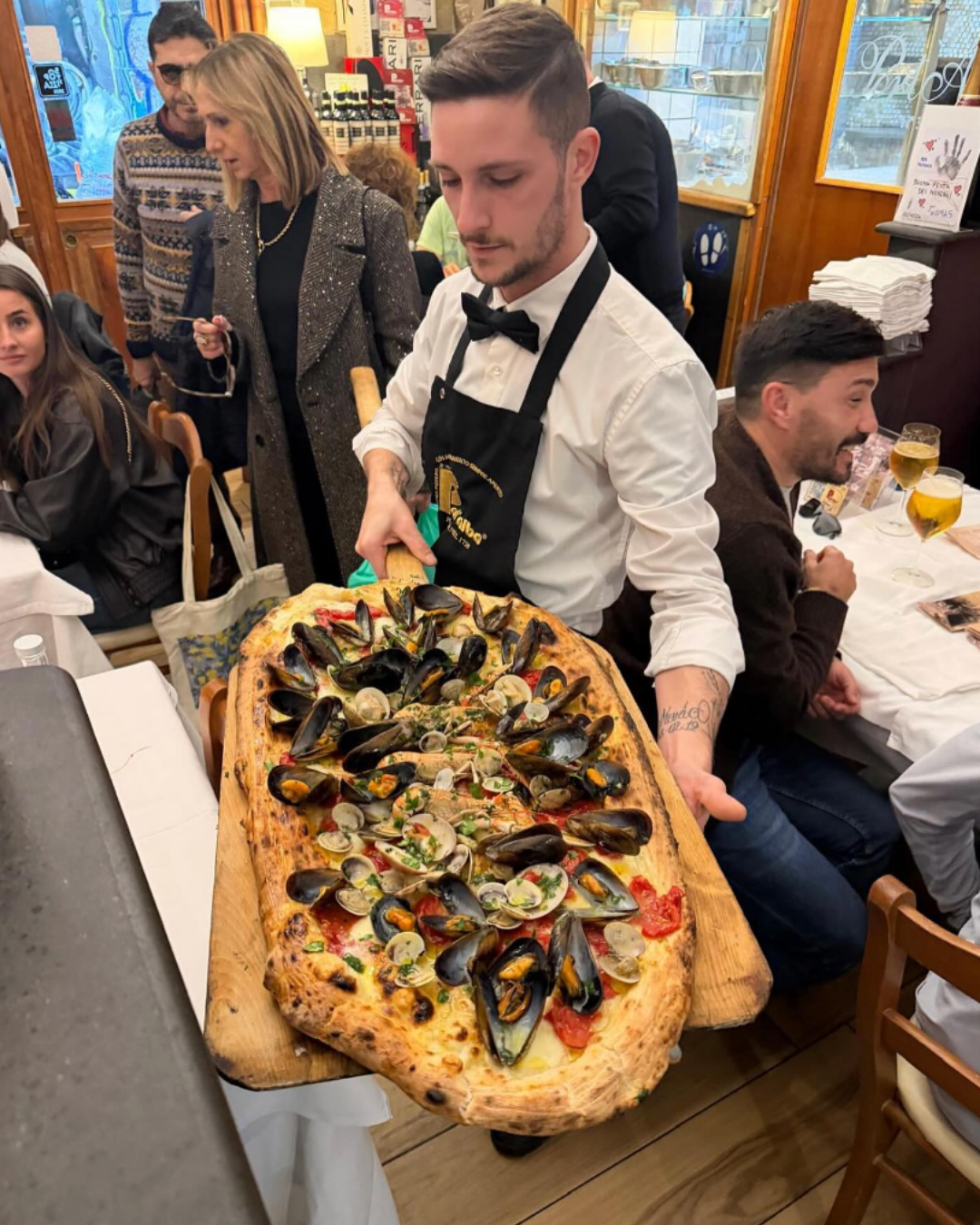
Port’Alba offers a direct connection to the early history of commercial pizza making in Naples.
The pizzeria traces its origins to 1738, when the site operated as an oven that supplied street vendors. It later developed into the type of seated pizzeria recognised today and is widely described as the oldest operating pizzeria in Naples.
Its location near the entrance to the historic centre adds to the experience. This is a place to appreciate the evolution of pizza from practical street food into one of Italy’s most recognisable culinary traditions.
What to order: Marinara or a classic tomato and mozzarella pizza
Why visit: For its extraordinary historical connection to the development of Neapolitan pizza.
Starita a Materdei
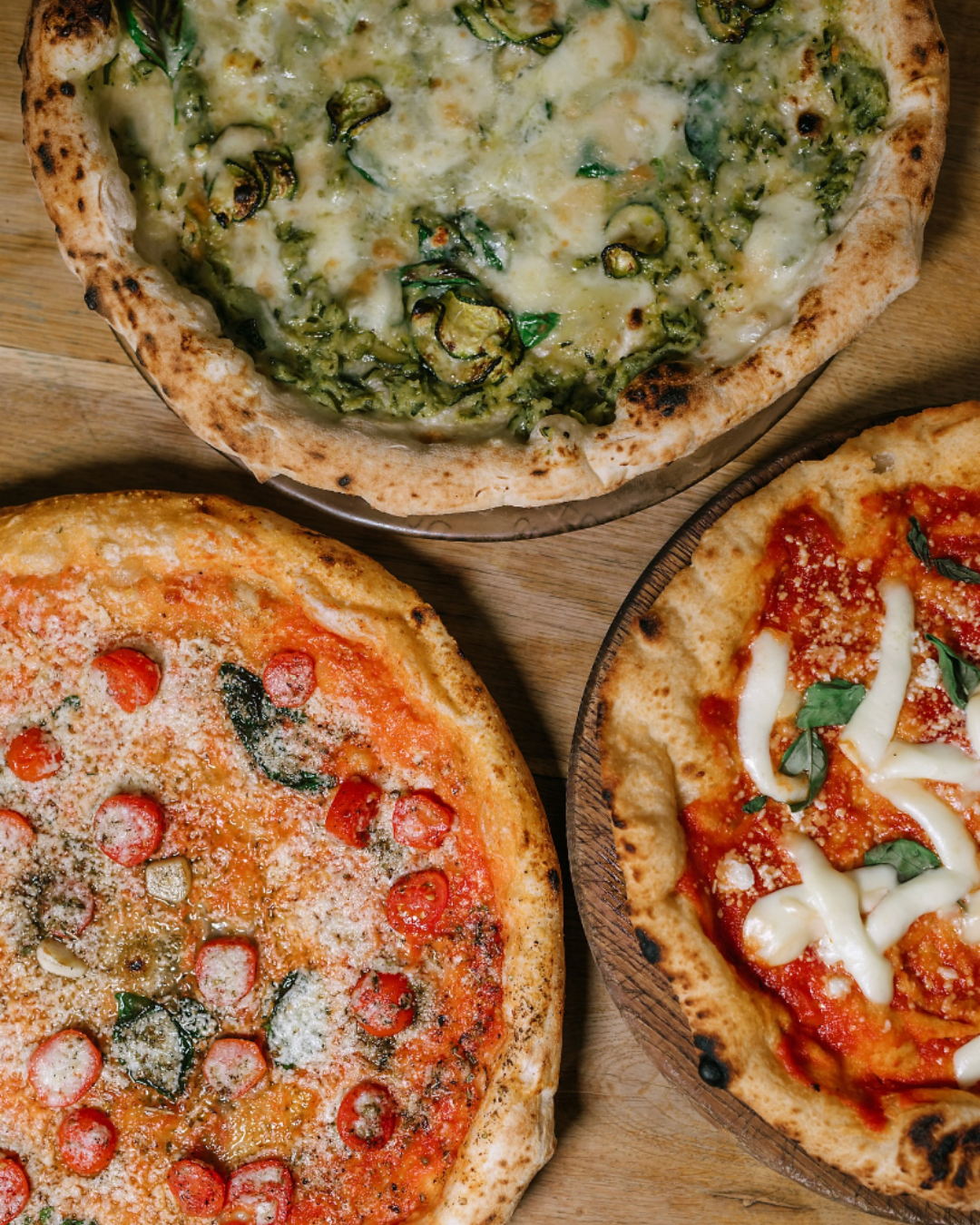
Starita began in the Materdei district in 1901 as a small wine cellar before evolving into a fried food shop and pizzeria. The restaurant has remained closely connected to its neighbourhood and family history for generations.
It is especially well known for both traditional baked pizza and pizza fritta. The Montanara is another classic choice, with dough that is fried before being finished with tomato and cheese.
Starita also has a strong connection to Neapolitan cinema. The restaurant supported the production of the 1954 film L’oro di Napoli, which featured Sophia Loren.
What to order: Montanara, Marinara or pizza fritta
Why visit: To explore both wood fired and fried expressions of traditional Neapolitan dough.
Gino Sorbillo, Via dei Tribunali
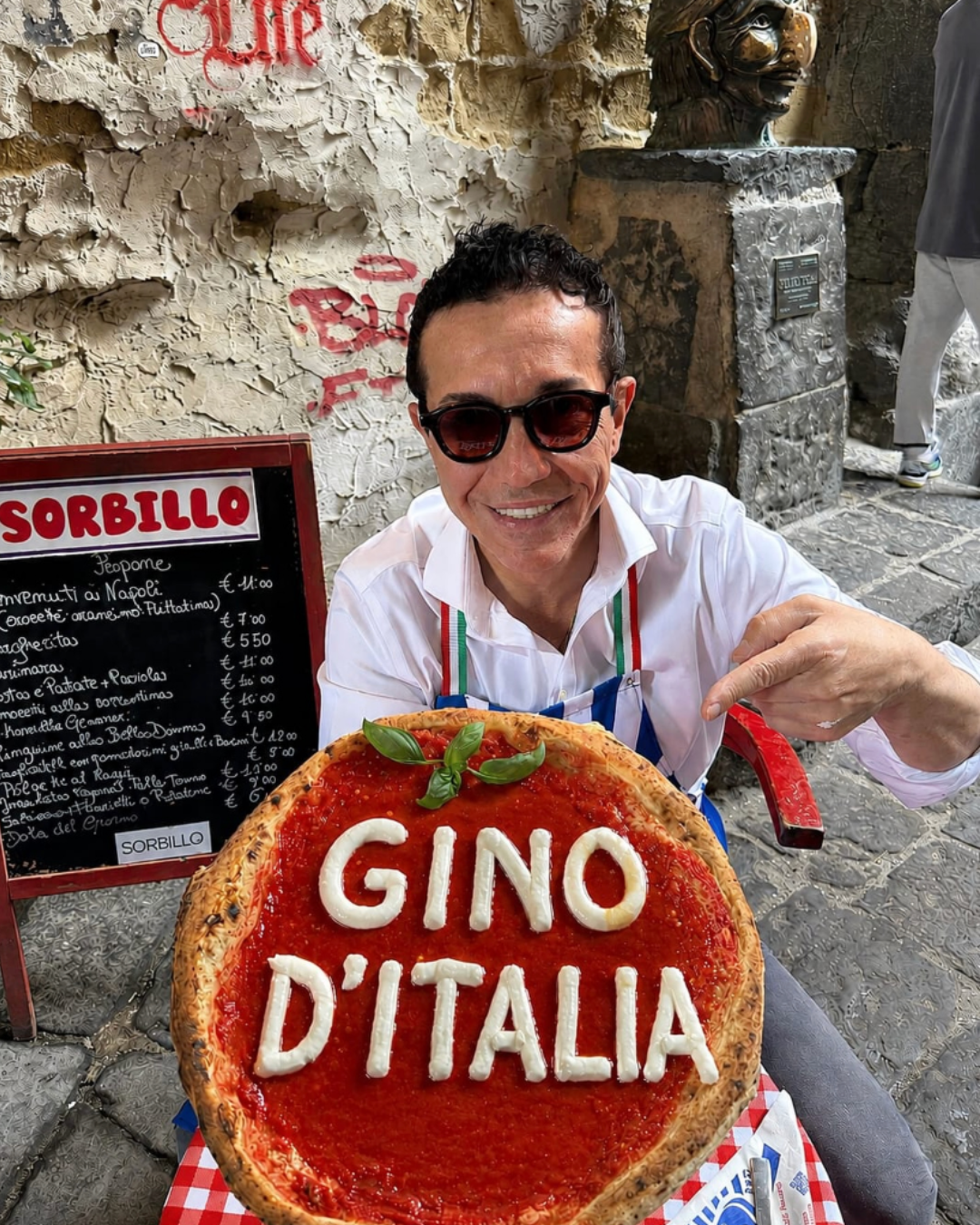
Via dei Tribunali is one of the most important streets for anyone exploring pizza in Naples, and Gino Sorbillo’s historic family pizzeria sits at its centre.
The original family business was opened by Luigi Sorbillo and Carolina Esposito in 1935. The restaurant began with only a handful of marble tables and developed into one of the city’s most recognised pizza destinations.
The atmosphere is busy and energetic, with pizzas that are large, soft and shaped in the recognisable Neapolitan style. The menu moves beyond the two foundational pizzas, but traditional combinations remain the best way to understand the dough.
What to order: Margherita, Marinara or a simple seasonal pizza
Why visit: To experience a lively family institution in the heart of Naples’ historic pizza district.
50 Kalò
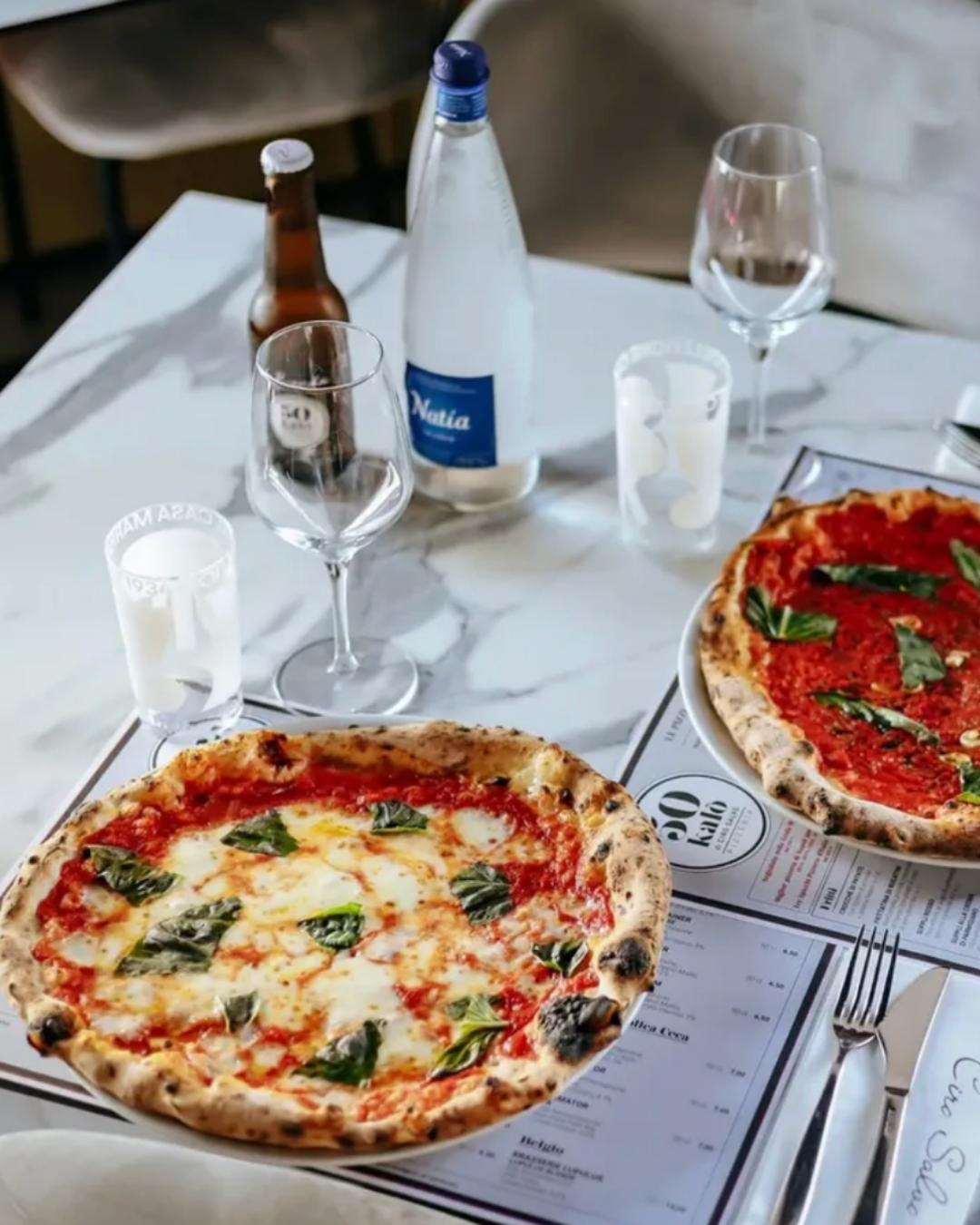
50 Kalò represents a more contemporary expression of Neapolitan pizza while remaining grounded in traditional technique.
Founded by pizzaiolo Ciro Salvo in Naples in 2014, the restaurant became known for careful dough development, measured hydration and precise fermentation. Its pizzas retain the soft centre and inflated cornicione expected from the Neapolitan style, with close attention paid to ingredient quality.
This is a strong choice for anyone interested in how traditional pizza continues to develop without losing its essential character.
What to order: Marinara, Margherita or Capricciosa Campana
Why visit: To see how fermentation, hydration and premium ingredients can refine a traditional format.
Pizzeria Brandi
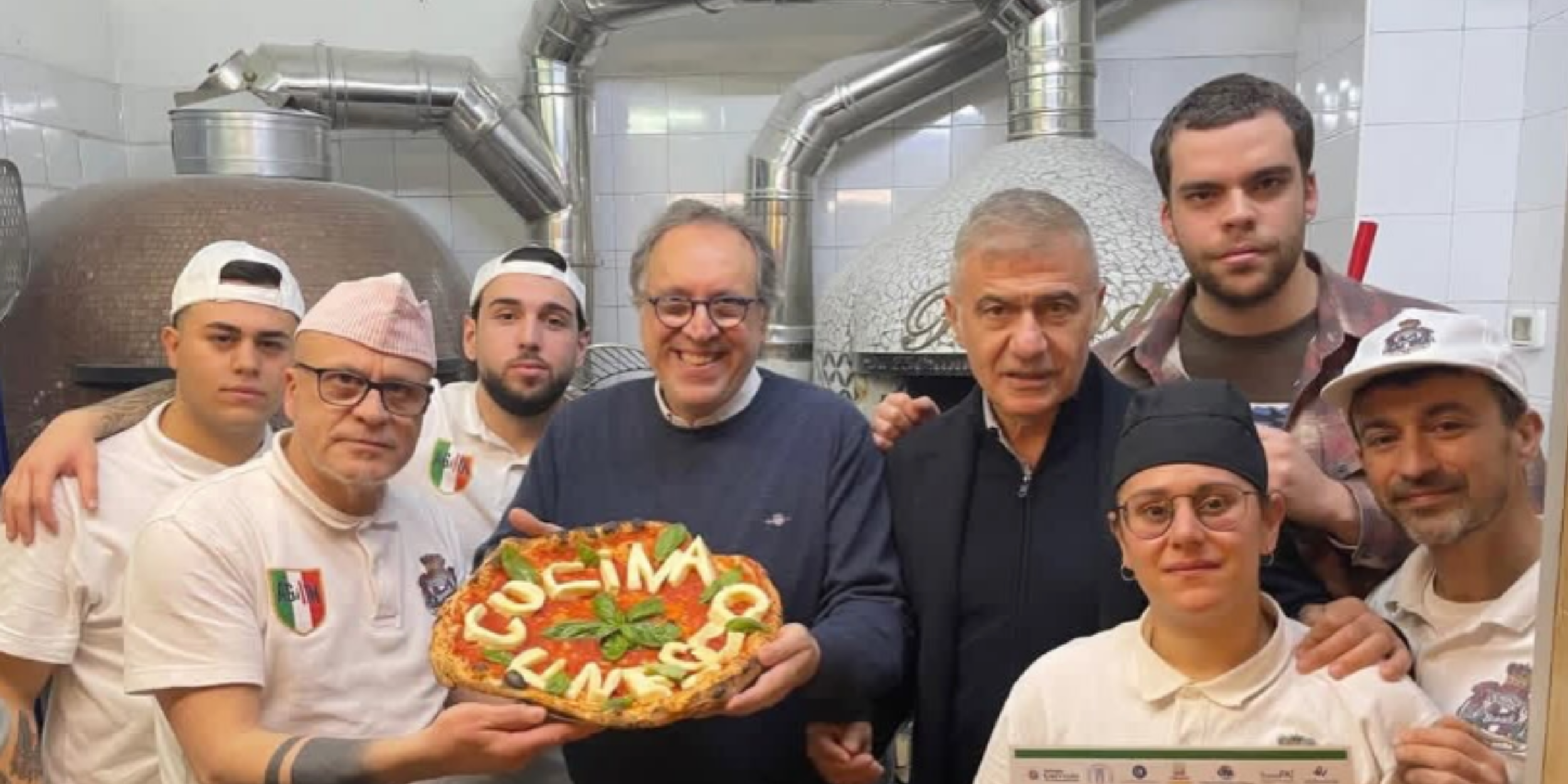
Pizzeria Brandi is closely tied to one of pizza’s most famous stories.
The restaurant is associated with the popular account of the Pizza Margherita being created in honour of Queen Margherita in 1889. The combination of tomato, mozzarella and basil reflected the colours of the Italian flag and helped establish the Margherita as an enduring symbol of Italian pizza.
While the exact history surrounding the Margherita has been debated, Brandi remains an important part of Naples’ pizza identity and is still a worthwhile stop for anyone interested in the dish’s cultural story.
What to order: Pizza Margherita
Why visit: To experience a restaurant connected to one of the most recognised traditions in pizza history.
Di Matteo
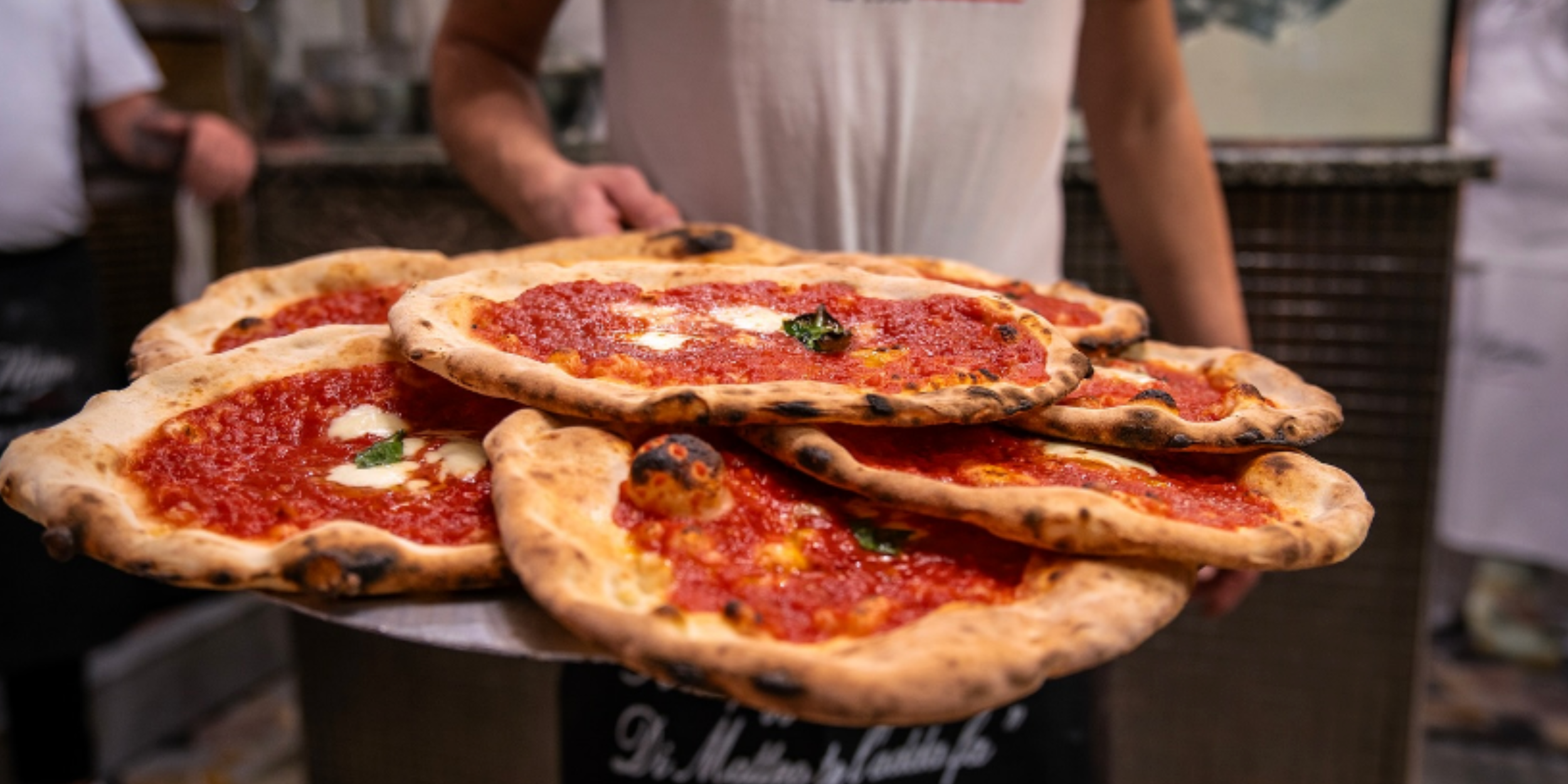
Di Matteo is another important stop along Via dei Tribunali.
The restaurant is known for traditional pizza as well as classic Neapolitan fried food. Expect a busy, informal experience where the focus is firmly on flavour, speed and the energy of the street.
A visit here also gives you the chance to try pizza a portafoglio. This smaller, soft pizza is folded into quarters so it can be eaten while walking. It is one of the clearest reminders that pizza in Naples has always been practical, accessible food as well as a restaurant experience.
What to order: Pizza a portafoglio, Marinara or pizza fritta
Why visit: To experience pizza as everyday Neapolitan street food.
What Makes a Pizza in Naples Feel Authentic?
Authenticity is not determined by fame, long queues or the number of toppings on a menu.
It comes from the relationship between dough, fermentation, shaping and heat.
A properly made Neapolitan pizza should feel soft rather than brittle. The centre should remain thin and flexible, while the cornicione rises quickly in the oven. Small areas of blistering provide flavour without turning the crust dry or burnt.
The toppings should support the base rather than bury it.
Tomato brings acidity and sweetness. Mozzarella adds richness and moisture. Olive oil carries aroma across the surface. Basil, garlic, anchovies or oregano should each have a clear purpose.
When the balance is right, even a simple Marinara can feel complete.
Margherita or Marinara: Where Should You Start?
When visiting a respected pizzeria for the first time, begin with one of the classics.
The Marinara uses tomato, garlic, oregano and olive oil. With no cheese to soften or cover the flavour, it reveals the quality of the dough, tomato and bake immediately.
The Margherita adds mozzarella and basil, introducing more moisture, richness and balance. It is still simple enough to show whether the dough has been fermented, opened and cooked with care.
More elaborate toppings can be excellent, but the foundational pizzas provide the clearest view of a pizzeria’s technique.
How to Plan Your Naples Pizza Tour
Avoid trying to visit every famous pizzeria in one day. A better approach is to select restaurants that show different parts of the tradition.
Visit Da Michele for restraint and simplicity. Choose Port’Alba for history. Head to Starita for fried dough and neighbourhood character. Experience Sorbillo for the energy of Via dei Tribunali, then visit 50 Kalò to see a more precise contemporary interpretation.
Opening hours, booking policies and menus can change, so check each restaurant’s official information before visiting. At popular locations, arriving outside the busiest lunch and dinner periods may reduce the wait.
Most importantly, watch the process.
Notice how the dough is handled without forcing it. Look at how little topping is needed. Listen to the oven. See how quickly the crust expands when it meets the heat.
That is where the real lesson begins.
Bringing the Lessons of Naples Home
You do not need to copy every detail of a famous Naples pizzeria to make better pizza at home.
Start with the principles.
Give the dough enough fermentation time. Shape it gently so the outer edge can hold its gas. Use premium ingredients with restraint. Build a clean fire and understand how the oven transfers heat into the base and crust.
At Marino & The Dough, these are the skills guests learn by doing. You mix, shape, top, cook and share your own pizza while Luke guides the process with calm, practical instruction. Our 72-hour fermented dough provides the foundation, but the real value comes from understanding how each stage works together.
Ready to develop your own pizza technique? Book a private Marino & The Dough masterclass and bring the experience of authentic Italian pizza into your home.