
How to Achieve an Incredible Pizza Crust: Neapolitan, Biga and Poolish Explained
How to Achieve an Incredible Pizza Crust
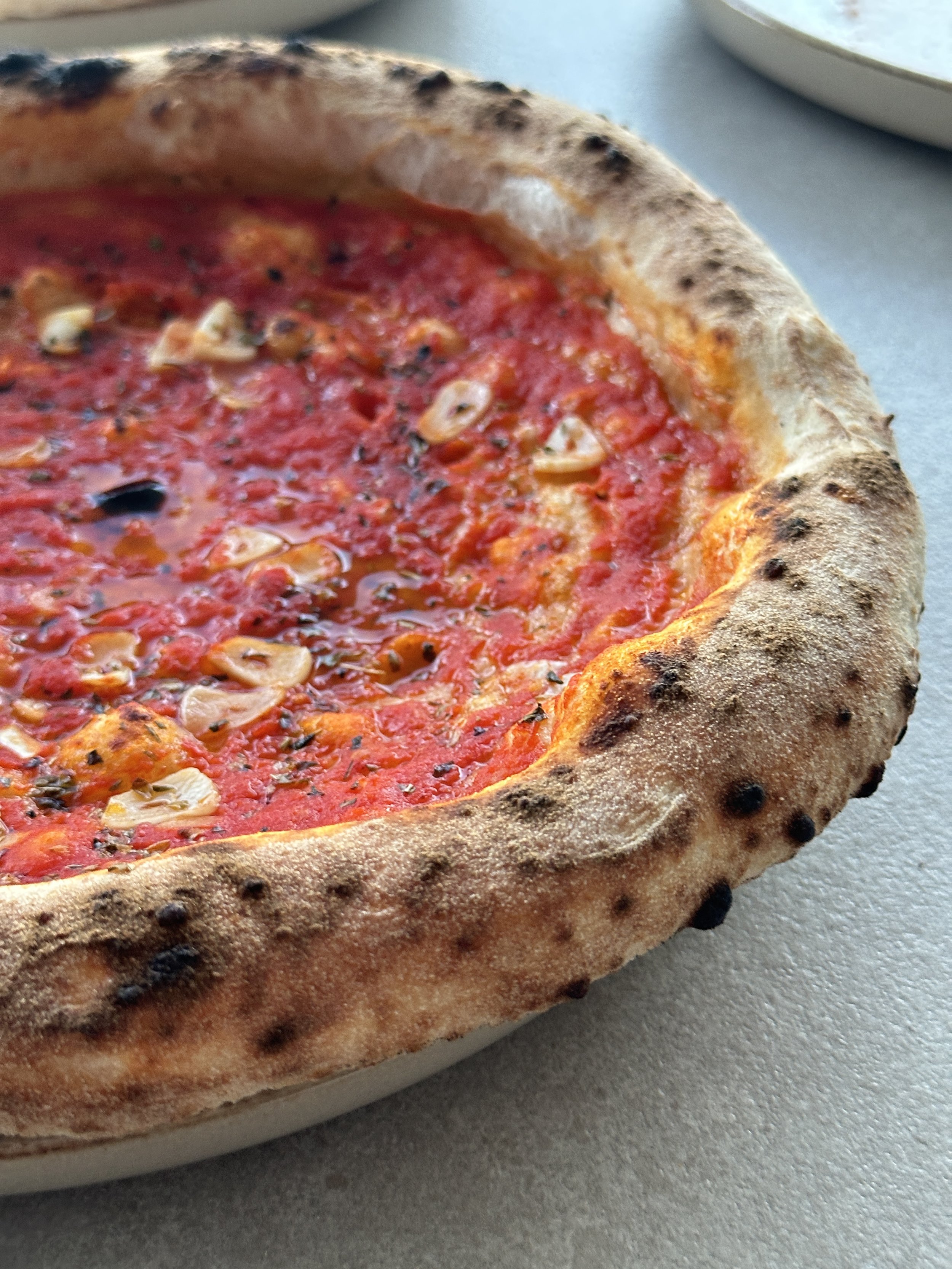
Look closely at a great pizza crust and there is plenty to read.
The colour tells you how the dough responded to the heat.
The bubbles tell you something about fermentation and how gently the dough was handled.
The inside of the crust reveals its structure.
Then you bite into it.
Is it light?
Chewy?
Soft?
Crisp at the surface?
Does it taste mostly of wheat, or can you pick up deeper fermentation notes?
An incredible pizza crust is not created by one secret ingredient. It is the result of fermentation, flour, water, time, shaping and heat working together.
And changing the way you ferment the dough can completely change the finished pizza.
That is where terms such as Neapolitan, biga and poolish start appearing.
But they do not all mean the same thing.
First, what are we actually comparing?
This is where pizza terminology can become confusing.
Traditional Neapolitan pizza is a style of pizza with its own dough making and cooking approach.
Biga and poolish are preferments.
A preferment is simply a portion of flour, water and yeast that begins fermenting before the final dough is mixed. It gives fermentation more time to develop before the rest of the ingredients come together.
Poolish is made with equal weights of flour and water, giving it a loose consistency.
Biga is an Italian preferment and, in modern pizza making, is commonly prepared much firmer.
So when someone talks about a biga pizza or poolish pizza, they are normally describing the fermentation method used to build the dough rather than an entirely different pizza style.
Understanding that difference makes everything else much easier.
What does a classic Neapolitan crust look like?
Think about a traditional Neapolitan pizza coming out of a very hot oven.
The centre is thin.
Around it sits a raised cornicione.
The rim has expanded rapidly under intense heat, producing a soft and airy interior with blistering and darker spots across the outside.
The official Neapolitan pizza method uses a direct dough process with flour, water, salt and yeast, followed by fermentation before shaping and cooking. Added sugar and fat are not part of the traditional dough formula.
Colour
Expect a mixture of pale gold, toasted brown and darker blistered areas.
That contrast is part of the character of the crust.
You are not looking for one perfectly uniform brown colour.
Look
A good Neapolitan crust should rise around the edge while keeping the centre relatively thin.
The rim should look inflated rather than dense.
Cut it open and you want to see pockets of air rather than one solid wall of dough.
Taste
A well fermented direct dough can have a beautifully clean flavour.
You taste the wheat, salt and fermentation without too much getting in the way.
It can be surprisingly complex despite the simplicity of the ingredients.
Feel
The crust should have enough structure to hold itself together while remaining tender.
There may be a light crispness on the outer surface, but the interior should remain soft and pleasantly chewy.
Gozney similarly describes Neapolitan pizza as having a thin base with a puffy, chewy crust and a crisp exterior.
What changes when you use biga?
Biga introduces another stage into the fermentation process.
Instead of mixing the entire dough at once, part or sometimes all of the flour begins fermenting earlier as a pre-ferment.
In pizza making, biga is commonly mixed quite firm, so it looks very different from a wet batter.
It may appear rough and fragmented when first prepared rather than smooth like finished pizza dough.
Given enough time, fermentation begins working through that flour before the final dough is completed.
Colour
Biga itself does not automatically make a pizza darker.
Final colour still depends heavily on fermentation, flour, oven temperature, cooking time and the condition of the dough when it reaches the oven.
What you may notice in a well managed biga dough is strong, attractive browning alongside pronounced blistering.
Look
Biga has become particularly popular with pizza makers looking for dramatic crust structure.
When the formula, hydration, fermentation and shaping are working together, the cornicione can become tall and open with large internal pockets.
Gozney describes its 100 percent biga pizza dough as producing a flavourful and beautifully puffy crust.
The important words are when everything is working together.
Biga alone will not create an airy crust if the dough is poorly fermented, roughly handled or cooked without enough heat.
Taste
This is where many pizza makers become interested in biga.
The additional fermentation stage can build more developed aromas and a deeper grain character.
Instead of simply tasting flour and toppings, there can be another layer running through the crust itself.
Feel
A successful biga dough can feel light inside while still having noticeable strength and chew.
That contrast is appealing.
You can have a crust that looks substantial but feels much lighter when you bite into it.
What about poolish?
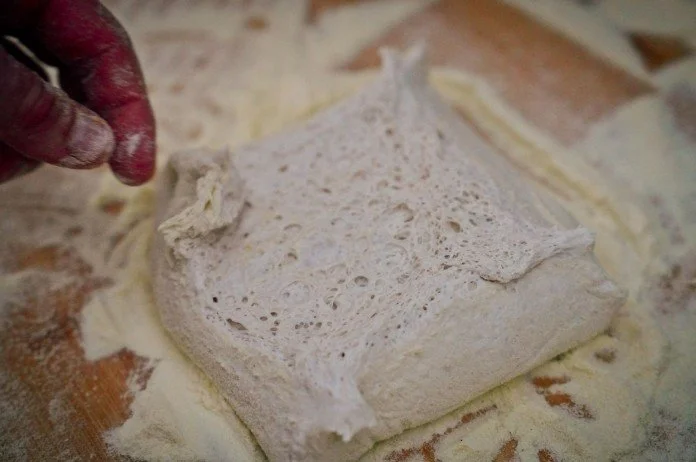
Poolish approaches prefermentation differently.
It is made with equal weights of flour and water, which means it is 100 percent hydration. A small amount of yeast is added and the mixture is allowed to ferment before being incorporated into the final dough.
Rather than looking like firm dough, ripe poolish is loose, aerated and almost batter like.
You may see bubbles across the surface and smell the fermentation before it ever reaches the final mix.
Colour
Again, poolish does not dictate one specific crust colour.
You can expect attractive golden colouring and blistering when fermentation and cooking are well controlled, but the oven still has the final say.
Look
Poolish can help create a dough that stretches beautifully.
King Arthur notes that poolish can increase extensibility, which simply means the dough can become easier to stretch without immediately pulling itself back.
Used well in pizza, that can contribute to an open, delicate crust structure.
Taste
Poolish can add more aroma and fermentation character to the finished dough.
It does not need to taste sour.
Think more about increased complexity.
The crust itself becomes something worth tasting rather than simply the part holding the toppings.
Feel
A poolish based dough can feel particularly supple while you are shaping it.
After cooking, the crust can be soft and airy inside with a fine crispness across parts of the exterior.
| Classic Neapolitan direct dough | Biga based dough | Poolish based dough | |
|---|---|---|---|
| What it is | A pizza style using a direct dough method | Dough made using an Italian preferment | Dough made using a liquid preferment |
| Preferment texture | No separate preferment | Usually firm in modern pizza making | Loose and batter like |
| Typical look | Puffy rim, thin centre, blistering | Can create a tall, open and structured rim | Can create an airy, delicate and open rim |
| Taste | Clean wheat and fermentation character | Often deeper and more developed | Aromatic with layered fermentation notes |
| Feel | Tender with pleasant chew | Light interior with strength and chew | Supple, light and tender |
| Best reason to explore it | Understanding the foundations of great pizza | Exploring structure and fermentation depth | Exploring extensibility and aroma |
The important point is that none of these methods guarantees a particular result.
The method gives you possibilities.
Technique decides what happens next.
The crust begins long before the oven
It is easy to look at an airy pizza crust and assume the oven created everything.
The oven finishes the job.
But much of that structure has already been built before the pizza reaches the heat.
Fermentation creates gas within the dough.
Gluten gives that gas somewhere to be held.
Time allows the dough to mature.
Then shaping determines how much of that structure survives.
Press all the air out of the edge and there is very little left for the oven to expand.
Handle the dough gently and preserve those gases around the cornicione, and the heat suddenly has something to work with.
That is why learning what dough feels like matters just as much as reading a recipe.
This is what we teach at Marino & The Dough
Understanding dough becomes much easier when it is in front of you.
At a Marino & The Dough masterclass, Dough Artisan Luke Marino guides guests through the process with their hands in the dough.
You learn how dough should feel.
You learn what happens as it develops.
You learn how to stretch a base without pushing all the air out of the edge.
Then you see what changes once the pizza meets real heat.
The crust lifts.
Air pockets expand.
Blisters begin to appear.
The outside colours while the inside stays light and airy.
Our masterclasses are built around learning those connections rather than simply following a set of instructions. Guests learn traditional hand stretching techniques, topping balance and how to recognise when a pizza is properly cooked.
Later in the experience, guests work with Marino & The Dough's 72 hour fermented dough, giving them a clear example of what patient fermentation can bring to flavour, texture and airy crust structure.
Because once you understand what you are looking and feeling for, making great pizza at home becomes much less mysterious.
So how do you actually get an airy pizza crust at home?
You do not need to chase the largest possible bubble.
A great crust should still taste good, cook properly and feel balanced with the rest of the pizza.
Focus on five things.
Give fermentation enough time. Flavour and internal structure develop through fermentation, not through rushing the dough towards the oven.
Use a dough method you understand. Direct dough, biga and poolish can all produce excellent pizza. Consistency comes from learning one method properly before constantly changing formulas.
Handle fermented dough gently. When shaping, move the gas towards the edge rather than flattening the entire dough ball.
Keep your toppings balanced. A beautifully fermented base can still struggle if it is carrying too much sauce, cheese or moisture.
Cook with proper heat. High heat creates the rapid expansion, blistering and colouring that gives pizza crust so much of its character.
Do you need biga or poolish to make great pizza?
No.
This is probably the most useful thing to understand.
A preferment is a tool.
It is not a requirement for good pizza.
A beautifully fermented direct dough can produce an exceptional crust.
A poorly managed biga can produce disappointing pizza.
The same is true of poolish.
More complicated does not automatically mean better.
The best dough method is one that works with your flour, your schedule, your oven and the style of pizza you want to make.
Once you can consistently control fermentation, shaping and heat, experimenting with biga or poolish becomes much more meaningful because you can actually recognise what changed.
Learn to read your crust
Next time a pizza comes out of your oven, do not only ask whether it tastes good.
Look at it.
Where did it colour?
How much did the rim expand?
Cut through the cornicione.
Are there open pockets or is it dense?
Pick it up.
Does the crust feel heavy for its size?
Then taste it on its own.
Can you taste the fermentation?
Is the outside crisp while the inside remains tender?
Does it have enough chew without becoming tough?
That is how you start understanding dough.
Not by chasing one perfect photograph, but by connecting what you did during fermentation and shaping with what came out of the oven.
And once you start seeing those connections, every pizza becomes another lesson.
Real pizza, real heat, real connection.
Want to understand dough with your hands rather than only reading about it? Book a Marino & The Dough masterclass and learn how fermentation, shaping and real heat come together in the finished crust.