
Home Pizza Crust Heat Guide: How to Get Your Pizza Right in a Gozney Oven
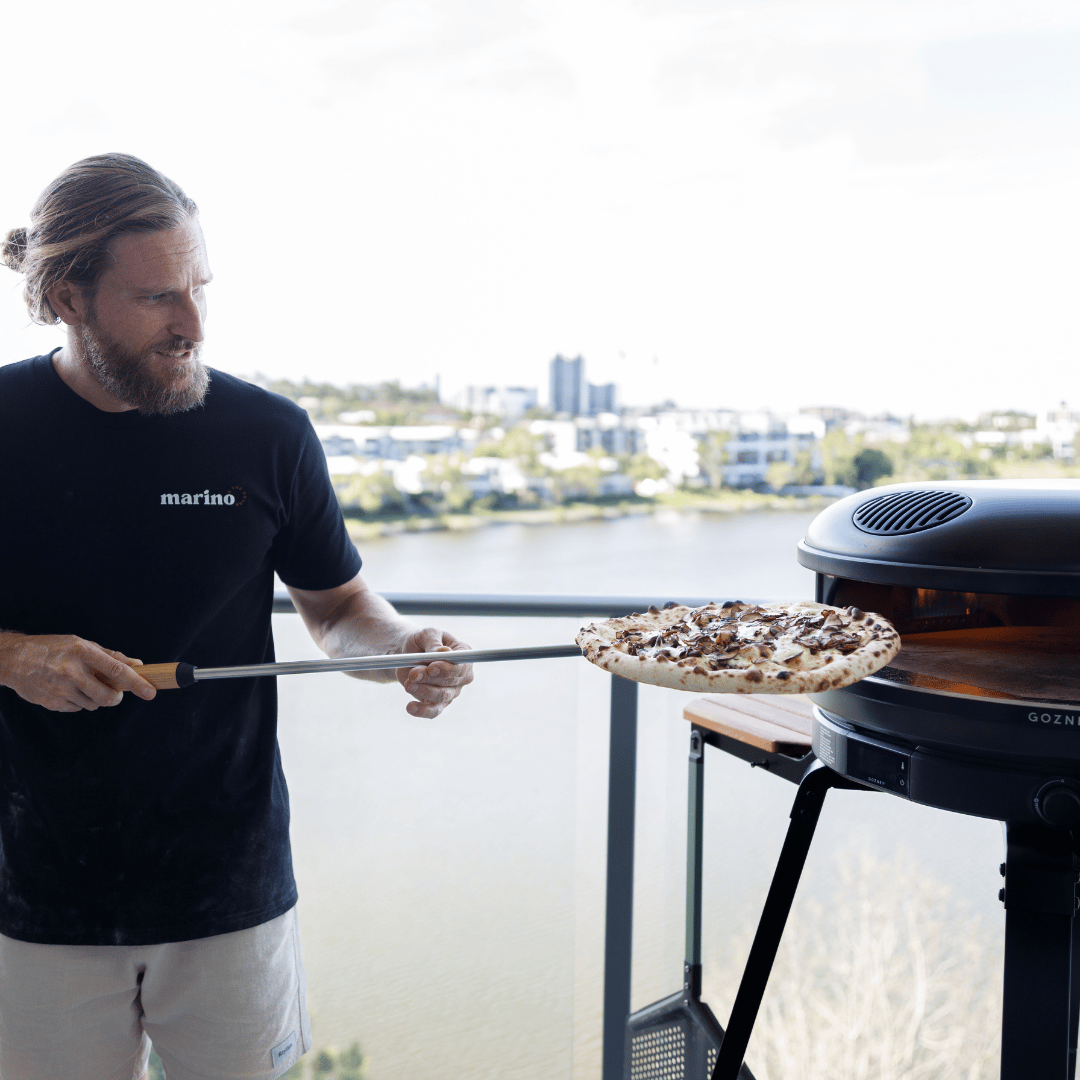
Why Heat Matters So Much in Pizza Making
Pizza cooks fast, which means heat affects every stage of the process almost immediately.
Inside a Gozney oven, the dough begins reacting as soon as it touches the stone. The rim rises, moisture evaporates, air pockets expand, and colour develops across the crust within seconds.
That is why experienced pizzaiolos are always watching the oven closely.
They pay attention to:
how quickly the crust colours
where the flame is sitting
how the base cooks underneath
how the pizza responds during turns
whether the bake needs more flame or more stone heat
These small adjustments are what create consistency.
Understanding Stone Heat and Flame Balance
One of the most common mistakes home cooks make is focusing only on the visible flame.
The flame matters, but the stone temperature is equally important.
If the stone is too cool, the crust may colour before the base fully cooks. If the stone is too hot, the bottom can burn before the toppings and rim finish properly.
Balanced heat creates:
strong oven spring
soft but structured centres
light blistering and spotting
balanced colour across the crust
a cleaner overall bake
This is why allowing the stone enough time to absorb heat properly makes such a difference before cooking begins.
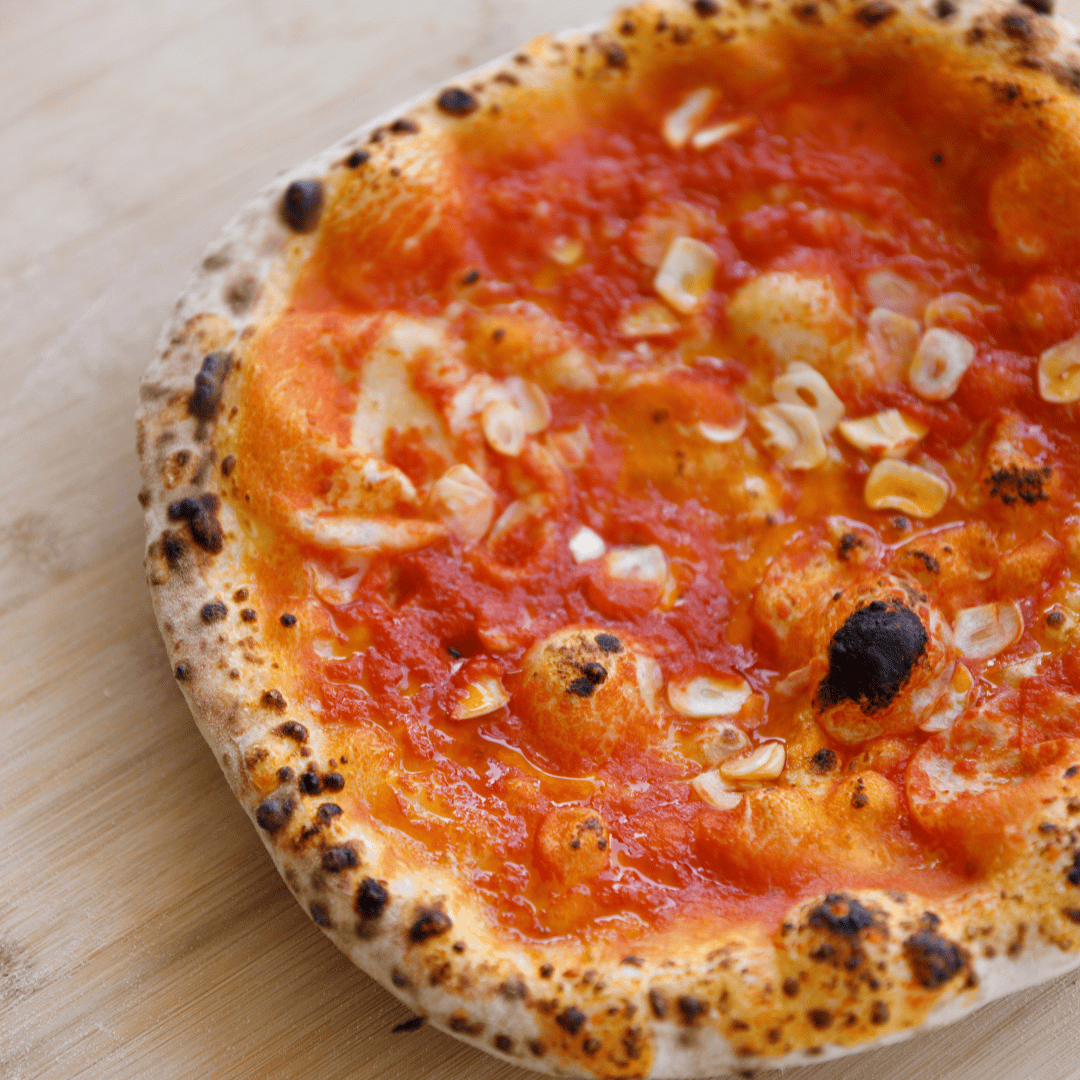
Learning to Read the Crust
Comment: A close up of pizza crust blistering beside open flame inside a Gozney oven.
Your crust tells you what the oven is doing.
A pale crust can suggest lower top heat or a pizza removed too early. Heavy dark spotting may mean the flame is too aggressive or the pizza stayed static for too long before turning.
Good pizza makers learn to recognise these visual cues naturally over time.
That includes understanding:
golden colouring for softer finishes
leopard spotting from stronger flame exposure
rapid bubbling from intense heat contact
slower crust development from lower temperatures
These details help you adjust confidently while the pizza cooks.
Timing and Turning Inside a Gozney Oven
High heat ovens reward attention and movement.
In many home pizza ovens, pizzas may bake in around 60 to 90 seconds depending on hydration, dough structure, and temperature. That means turning technique becomes incredibly important.
The first turn often happens once the crust nearest the flame begins rising and colouring properly.
From there, small controlled rotations help expose each section of the pizza evenly to the flame while preserving structure through the rim.
Turning too early can interrupt oven spring. Turning too late can create uneven colouring or burnt sections through the crust.
Learning this rhythm is one of the biggest breakthroughs for home pizza makers.
Product Pick: Private Pizza Masterclass
A hands-on masterclass designed for home pizza makers who want to improve technique, oven confidence, and consistency.
Work alongside Dough Artisan Luke Marino to refine shaping, heat management, turning, and baking technique using premium ingredients and beautifully prepared 72 hour fermented dough.
Learn how to work with flame, stone heat, and timing in a relaxed setting designed for real understanding and hands-on learning.
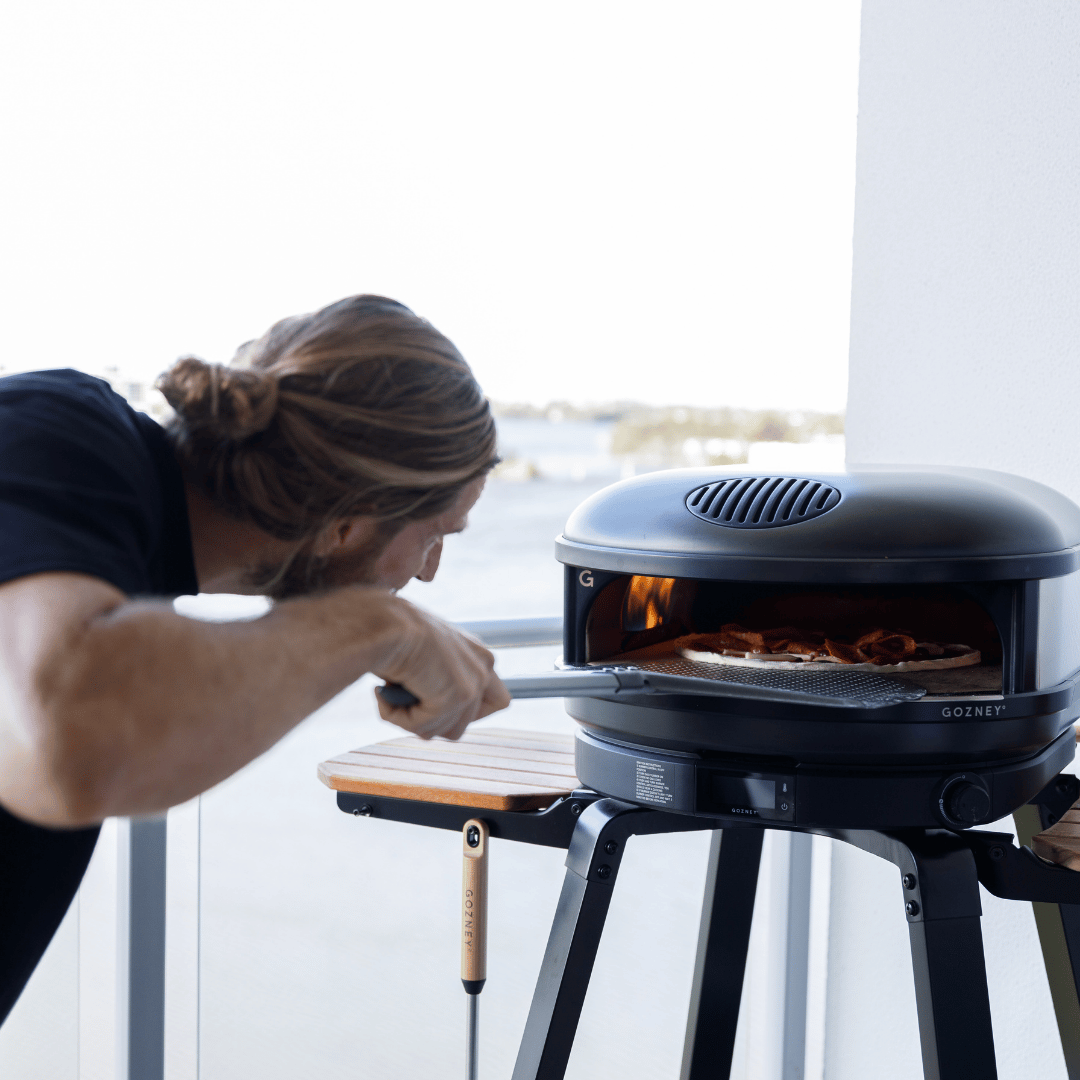
Why Technique Matters More Than Equipment
Great ovens help, but technique is what creates consistency.
Understanding dough structure, fermentation, shaping and heat management together allows you to cook with far more control and confidence.
Inside every Marino & The Dough masterclass, guests learn how these elements connect through hands-on guidance, real time adjustments and authentic pizza making from scratch.
Real pizza, real heat, real connection.
FAQ: Home Pizza Crust Heat Guide
1. What temperature should a Gozney oven be for Neapolitan pizza?
Most Neapolitan style pizzas cook best when the stone is fully heated and the oven is running at high temperature with balanced flame exposure. Consistent stone heat and controlled turning help create better oven spring, crust colour, and texture.
2. Why does my pizza crust burn before the centre cooks?
This usually happens when the flame is too aggressive or the stone temperature is uneven. The crust closest to the flame colours too quickly before the base and centre have time to finish properly.
3. How often should I turn pizza in a pizza oven?
Small controlled turns throughout the bake help expose the pizza evenly to the flame. Turning too late can create burnt sections, while turning too early may interrupt oven spring through the crust.
Take your pizza skills further
Learn authentic Neapolitan pizza technique with Dough Artisan Luke Marino through a hands-on private masterclass designed for home cooks, food enthusiasts, and aspiring pizzaiolos.